

The Headache, Neck and Jaw Clinic is a specialist physiotherapy clinic. We treat headache, neck and jaw conditions across nine clinics in Queensland and Western Australia.
If you’ve already seen a physiotherapist about your headaches without much improvement, or you’ve been told your neck is tight and sent home with stretches that didn’t change anything, that specialty can make all the difference to your recovery.
What Does a General Physiotherapy Clinic Do?
A general physiotherapy clinic treats a broad range of musculoskeletal conditions. On any given day, a physiotherapist might see a sporting injury, a post-surgical shoulder, a lower back complaint, and someone whose headaches have been getting worse for months.
That breadth has real value. For an acute injury or a straightforward rehabilitation program, a good general physiotherapist is the right choice.
But it means headache, neck and jaw conditions sit alongside everything else rather than being the focus. For people with recurring or long-standing headaches, a general assessment might not be enough to resolve the problem.
Still in Pain After Seeing a Physiotherapist Before?
Not getting results previously doesn’t mean your symptoms can’t be helped.
Most general physiotherapy programs for headaches focus on posture correction and muscle tension. Where the underlying driver is sensitivity in the upper cervical spine, or a contribution from the jaw, those programs can miss it entirely.
An assessment that specifically looks for those drivers often produces a different answer.
Why We Only Treat Headache, Neck and Jaw Conditions
In 2012, this clinic had a general caseload like any other practice.
What our physiotherapists kept seeing was a particular type of patient. People who had been through their GP, had scans come back clear, and were managing with medication that reduced the pain without ever explaining it. Their necks were being treated as stiff necks. Their headaches were being treated as a consequence of the stiff neck. The jaw was rarely assessed at all.
Some of those patients improved. Many did not.
That year, the clinic decided to stop treating general musculoskeletal conditions and focus entirely on one region of the body.
Since then, we’ve grown our team to more than 20 physiotherapists across nine locations, all dedicated to treating conditions from the neck up. Our physiotherapy team works hard to improve our specialist skills in this area to get better outcomes for our patients.
What Does Specialising in One Region Actually Change?
The assessment is more specific
A general headache assessment usually checks your neck’s range of movement and looks at your posture.
A specialist assessment asks a narrower question: which structure is producing this headache?
That means examining the upper cervical spine segment by segment, because the nerves at the top of the neck communicate directly with the brainstem through the trigeminocervical nucleus, the structure that processes signals from your head, neck, jaw and face. When those segments become sensitised, they can produce or amplify headache symptoms.
It also means assessing the jaw. Clenching and jaw joint irritation refer pain into the head, temples and behind the eyes far more often than most patients realise, and jaw and neck symptoms frequently occur together.
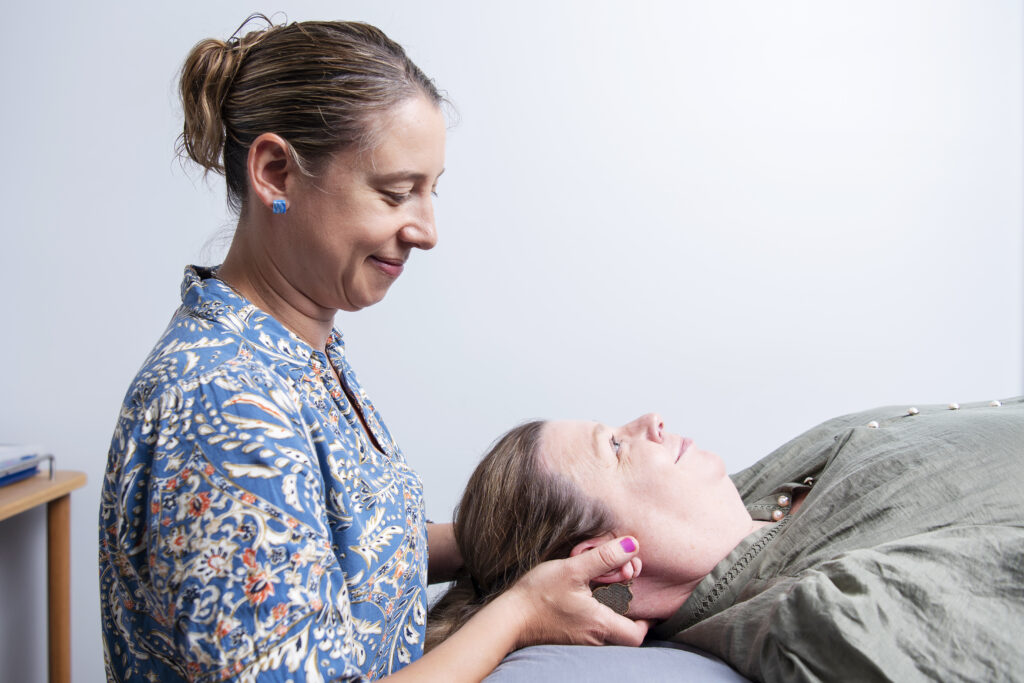
Our physiotherapists are trained in the Watson Headache® Approach, which allows us to gently reproduce your symptoms during an assessment to confirm whether your neck is involved. If we can reproduce your symptoms, we can treat them.
We see conditions that often get missed
When a team treats headache, neck, and jaw presentations exclusively, it’s easier to recognise less common presentations.
Conditions we assess regularly include:
- Vestibular migraine, which can cause dizziness with no headache at all
- Cervicogenic dizziness, where the dizziness originates in the neck rather than the inner ear
- Occipital neuralgia, often mistaken for migraine
- Post-traumatic headache following a concussion or whiplash injury
- New daily persistent headache, which begins on a specific day and doesn’t resolve
Treatment is aimed at the cause
Treating the painful area provides relief, but it doesn’t last if the painful area is not the source.
Working within a single region gives us time to identify what’s driving your symptoms and treat that instead. Our techniques are slow and sustained. We don’t use cracking or high-velocity manipulation, and you remain in control throughout.
We also track your progress objectively. Within three to four treatments, you should know whether the approach is working for you. If we can’t change your symptoms, we will tell you and help you find the next appropriate step rather than continuing to book appointments.
What Does 20+ Physiotherapists Across Nine Clinics Mean for You?
- A team rather than an individual: Unusual presentations get discussed across the team. A group built entirely around one area of the body has a wealth of shared clinical knowledge to draw on.
- A consistent approach at every location: Our clinics use the same assessment method and clinical standards, so changing locations doesn’t mean starting again.
- A clinic near you: Some locations are busier than others and wait times vary. If you’d like to be seen sooner, it can be worth checking availability at a nearby clinic as well as your closest one.
Do You Need a Referral to See Us?
No. Physiotherapists in Australia are primary contact practitioners, so you can book directly without seeing your GP first.
If you do have a referral, bring it with you. If you don’t, it won’t hold anything up.
Still in Pain After Seeing a Physiotherapist Before?
Not getting results previously doesn’t mean your symptoms can’t be helped.
Most general physiotherapy programs for headaches focus on posture correction and muscle tension. Where the underlying driver is sensitivity in the upper cervical spine, or a contribution from the jaw, those programs can miss it entirely.
An assessment that specifically looks for those drivers often produces a different answer.
Book an Assessment With a Specialist Headache Physiotherapist
Living with headache, neck or jaw pain affects far more than the hours you’re in pain. It affects your work, your sleep, and the time you can give the people around you. After enough appointments that haven’t helped, it’s understandable to stop expecting one to.
An assessment with our team will tell you what’s actually causing your symptoms and whether physiotherapy can change them.
Book an appointment at your nearest clinic, or get in touch with our team if you’d like to talk it through first.
Frequently Asked Questions
Is a headache physiotherapist different from a regular physiotherapist?
The qualification is the same. The difference is scope and depth of experience. Our physiotherapists treat headache, neck and jaw conditions exclusively and are trained in the Watson Headache® Approach, so assessments are built specifically around identifying the source of head, neck and jaw symptoms.
Do I need a GP referral to book an appointment?
No. Physiotherapists in Australia are primary contact practitioners, so you can book directly. A referral is only relevant for certain rebate pathways, such as Medicare’s Chronic Disease Management plan.
What conditions do you treat?
Headaches and migraines, neck pain, TMJ and jaw pain, whiplash, vertigo and dizziness, tinnitus linked to the neck or jaw, and headache or neck symptoms following a concussion.
I’ve already tried physiotherapy and it didn’t work. Would this be different?
It can be, though we can’t promise it. What usually changes is the assessment. Identifying the specific structure driving your symptoms is often the missing step.
How long before I know whether treatment is working?
Most patients know within three to four treatments. If your symptoms aren’t changing in that time, we’ll tell you and help you work out the next step.
Do you have a clinic near me?
We have nine clinics across Brisbane, the Gold Coast and Perth. You can find opening hours and contact details for each on our locations page.

Nigel Smith, co-founder of The Headache, Neck & Jaw Clinic, has over 20 years of experience as a specialist physiotherapist in jaw, neck, and headache pain management. Initially pursuing sports physiotherapy, Nigel found his true calling in TMJ treatment following a chance encounter with an oral surgeon.
His personal experience with TMJ issues and his dedication to developing conservative treatment pathways have made him a go-to expert for Dentists and oral surgeons seeking alternatives to surgical options.
Nigel’s commitment to excellence includes advanced training with the Watson Headache® Institute and lecturing at the University of Queensland. His expertise, backed by decades of hands-on practice and training, makes him a respected leader in this niche field. You can read more about my background, here.