

The Role of the Upper Neck, Autonomic Dysfunction, and Central Sensitisation
Migraines and chronic headaches are more than just inconvenient; they can be deeply disabling. While common triggers such as stress, sleep disruption, and diet are well recognised, conditions like POTS (Postural Orthostatic Tachycardia Syndrome) and MCAS (Mast Cell Activation Syndrome) are increasingly identified as key contributors to persistent headaches, particularly when combined with upper cervical dysfunction and central sensitisation.
Understanding how these systems interact and how physiotherapy can help is essential for effective, long-term symptom management.
What is Postural Orthostatic Tachycardia Syndrome (POTS)?
Postural Orthostatic Tachycardia Syndrome (POTS) is a disorder of the autonomic nervous system, which regulates involuntary functions such as heart rate, blood pressure, digestion, and temperature control.
Common symptoms include:
- Rapid heart rate when standing
- Light headedness or dizziness
- Fatigue
- Brain fog
- Nausea
In POTS, impaired blood flow regulation can reduce oxygen delivery to the brain, increasing the likelihood of headaches and migraines. Frequent postural changes, prolonged sitting, and compensatory muscle tension often place additional strain on the upper cervical spine, further contributing to head and neck pain.
What Is Mast Cell Activation Syndrome (MCAS)?
Mast Cell Activation Syndrome (MCAS) involves inappropriate or excessive activation of mast cells, which release histamine and other inflammatory mediators.
Symptoms may include:
- Flushing and itching
- Gastrointestinal disturbances
- Allergic-type reactions
- Brain fog and fatigue
- Headaches and migraines
Histamine promotes vasodilation and neuroinflammation, both of which can amplify migraine pathways. In individuals with MCAS, even small inflammatory triggers can provoke significant headache symptoms.
The Role of the Upper Neck (C1–C3)
The upper cervical spine (C1–C3) has a direct connection to headache and migraine pathways via the trigeminocervical nucleus in the brainstem. Dysfunction in this region, including joint stiffness, muscle tension, or nerve irritation, can trigger cervicogenic headaches, which often coexist with migraines.
- In POTS, altered posture and muscle guarding increase upper neck load
- In MCAS, inflammatory sensitivity heightens nerve reactivity
- Reduced movement and protective tension further reinforce pain patterns
This makes the upper neck a critical but often overlooked contributor to chronic headache presentations.
Central Sensitisation and Chronic Headaches
Central sensitisation occurs when the nervous system becomes overly responsive, amplifying pain signals even in the absence of ongoing tissue damage. In chronic POTS and MCAS,repeated physiological stress and inflammation can drive this process.
Key features include:
- Heightened pain sensitivity in the neck and head
- Headaches triggered by minimal movement or strain
- Persistent symptoms despite standard migraine treatments
- Fatigue, brain fog, and reduced exercise tolerance
Central sensitisation helps explain why headaches may feel constant, disproportionate, or unpredictable.
The Watson Headache Approach and Upper Cervical Physiotherapy
The Watson Headache® Approach specifically targets dysfunction in the upper cervical spine (C1–C3) and is highly relevant for patients with POTS, MCAS, and central sensitisation.
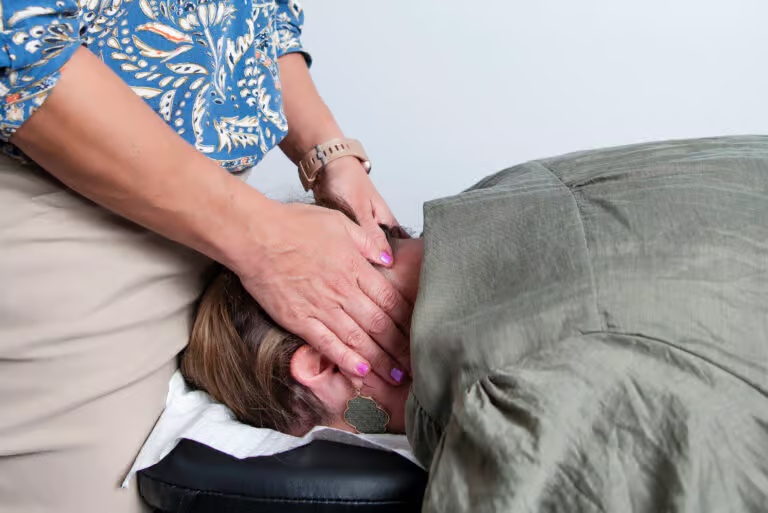
This approach includes:
- Precise manual therapy to the upper cervical joints
- Gentle mobilisation to restore normal movement
- Postural correction and muscle retraining
- Gradual exposure to the headache triggers to reduce pain sensitivity
By improving upper neck mechanics and reducing nociceptive input to the brainstem, this method helps desensitise central sensitisation and improve headache intensity, frequency, and duration.
How Physiotherapy Can Help
Physiotherapy plays a vital role in addressing the mechanical and neurological drivers of headaches in POTS and MCAS:
Upper Neck–Focused Treatment
- Targeted manual therapy and mobilisation
- Strengthening of deep neck flexors and upper back muscles
- Postural re-education to reduce sustained strain
Addressing Central Sensitisation
- Graded movement and activity pacing
- Education to reduce fear-driven muscle guarding
- Strategies to improve tolerance to daily activities
Integration with POTS Management
- Safe, progressive exercise strategies
- Postural modifications to reduce orthostatic stress
- Coordination with hydration, compression, and pacing strategies
A Combined, Multi-Layered Approach
Effective headache management often requires addressing multiple systems simultaneously:
- POTS: Improve blood flow regulation and postural tolerance
- MCAS: Reduce inflammatory and histamine-related triggers
- Upper neck therapy: Decrease cervicogenic input
Central sensitisation strategies: Retrain pain processing. Together, this integrated approach can reduce headache frequency and intensity, improve neck function, and enhance overall quality of life.
Bottom Line
Chronic headaches and migraines in people with POTS and MCAS are rarely caused by a single factor. Autonomic dysfunction, mast cell activation, upper cervical strain, and central sensitisation often overlap.
Physiotherapy, particularly upper cervical–focused care, offers a practical, evidence-informed way to address these contributors and support long-term symptom improvement alongside medical management.
If you suffer from POTS or MCAS book an appointment with the Headache Neck and Jaw Clinic. Our expert physiotherapists can help treat your symptoms to improve your quality of life.

Lisa Eisfeld is a trained physiotherapist from Germany. She has also studied advanced Manual therapy and finished her Osteopathy Diploma in 2018 at the School for Manual Medicine Berlin. Lisa has also attained her Watson Headache® Approach Level 1 Foundation and Level 2 Consolidation courses. Read more about Lisa.