

Understanding, Managing, and Recovering from Sudden Neck Pain
Have you woken up with your neck stiff, painful, and tilted to one side? You may be experiencing an acute wry neck, also called acute torticollis. It can be alarming, but the good news is that it usually resolves with simple physiotherapy care.
What is an Acute Wry Neck?
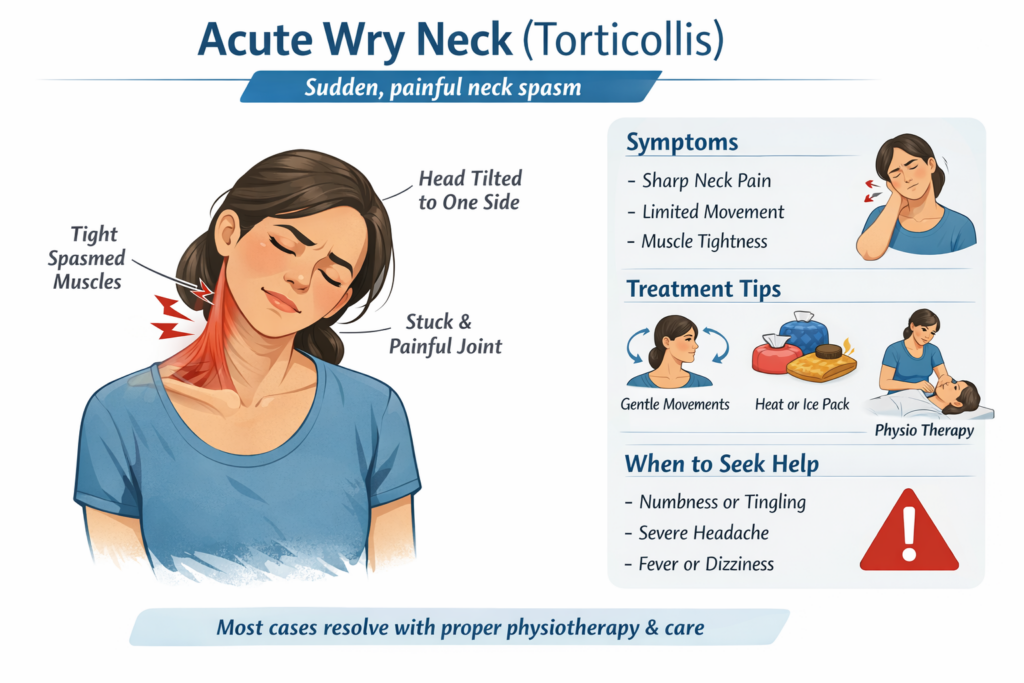
An acute wry neck happens when the neck muscles suddenly tighten or spasm, often after:
- Sleeping in an awkward position
- Sudden movement or strain
- Stress or muscle tension
- Minor injuries or poor posture
This can cause:
- Neck stiffness and pain
- Limited range of motion
- Head tilting to one side
- Muscle tightness around the neck and shoulder
It’s usually short-lived but can be very uncomfortable and impact daily activities.
Why Does Wry Neck Happen?
The neck has many small muscles controlling movement and stability. Sometimes, a sudden movement or strain triggers:
- Muscle spasm
- Inflammation
- Temporary “locking” of the neck joints
The body does this as a protective response, trying to prevent further injury.
What Should You Do To Manage a Wry Neck?
1. Gentle Movement
- Avoid complete immobilisation, it can prolong stiffness
- Move your neck slowly and within a comfortable range
- Small side-to-side turns or tilts can help muscles relax
2. Pain Relief
- Short-term use of ice or heat packs may ease discomfort
- Over-the-counter anti-inflammatories can help if safe for you
3. Posture Awareness
- Keep your head and shoulders supported
- Avoid prolonged positions that strain the neck (like looking down at devices)
4. Seek Physiotherapy
A neck physiotherapist can help you:
- Reduce muscle spasm with gentle manual techniques
- Restore the normal range of motion
- Teach exercises to prevent recurrence
- Identify posture or movement patterns that may have contributed
When to Seek Urgent Medical Attention
Most acute wry necks are benign, but see a doctor immediately if you notice:
- Numbness, tingling, or weakness in arms or legs
- Severe headache, dizziness, or visual changes
- Fever or signs of infection
These are rare, but it’s important to rule them out.
Wry Neck Recovery Timeline
With physiotherapy and proper care:
- Many people improve within a few days to a week
- Full recovery is possible within 1–2 weeks
- Gentle exercises and posture adjustments reduce the chance of recurrence.
Bottom Line
Acute wry neck is painful but usually temporary. Gentle movement, postural care, and physiotherapy support are key to a quick recovery and preventing future episodes. If you’re struggling with a wry neck, or if this keeps happening, book an assessment with an expert neck physiotherapist at the Headache Neck and Jaw Clinic to get targeted treatment and advice.

Lisa Eisfeld is a trained physiotherapist from Germany. She has also studied advanced Manual therapy and finished her Osteopathy Diploma in 2018 at the School for Manual Medicine Berlin. Lisa has also attained her Watson Headache® Approach Level 1 Foundation and Level 2 Consolidation courses. Read more about Lisa.