
For people living with frequent headaches or migraines, medication often feels essential. Painkillers and migraine-specific treatments can provide much-needed relief. But when these medications are used too often, they can paradoxically lead to more headaches, not fewer.
This condition is known as Medication Overuse Headache (MOH). MOH is common, under-diagnosed, and importantly, reversible.
What Is Medication Overuse Headache?
Medication Overuse Headache is a secondary headache disorder that develops when acute headache medications are taken too frequently. Instead of calming pain pathways, repeated use sensitises the nervous system, causing headaches to become more frequent and persistent. MOH typically develops in people who already have an underlying headache condition, such as migraine or tension-type headache.
Which Medications Are Involved?
MOH can occur with several commonly used medications, including:
- Simple analgesics (paracetamol, aspirin, ibuprofen)
- Combination pain medications (especially those containing caffeine or codeine)
- Triptans
- Opioids
As a general guide, overuse is defined as
- 10 or more days per month for triptans, opioids, or combination medications
- 15 or more days per month for simple painkillers
How Does MOH Present?
Medication overuse headaches often have recognisable features:
- Headaches on most days or daily
- A persistent, dull or pressure-like head pain
- Headaches that temporarily improve with medication, then quickly return
- Reduced effectiveness of previously helpful medications
- Increased sensitivity to light, noise, or movement
Many people describe never fully returning to a “headache-free baseline”, reinforcing the cycle of medication use.
Why Does Medication Overuse Cause Headaches?
With repeated medication use, the brain’s pain-processing systems change. Over time:
- Pain pathways become more sensitive
- The nervous system remains in a heightened state of alert
- Natural pain-inhibiting mechanisms become less effective
This process is closely linked to central sensitisation, where the brain becomes overly responsive to pain signals even without ongoing tissue damage.
The Upper Neck Connection: A Key Driver of Ongoing Headache
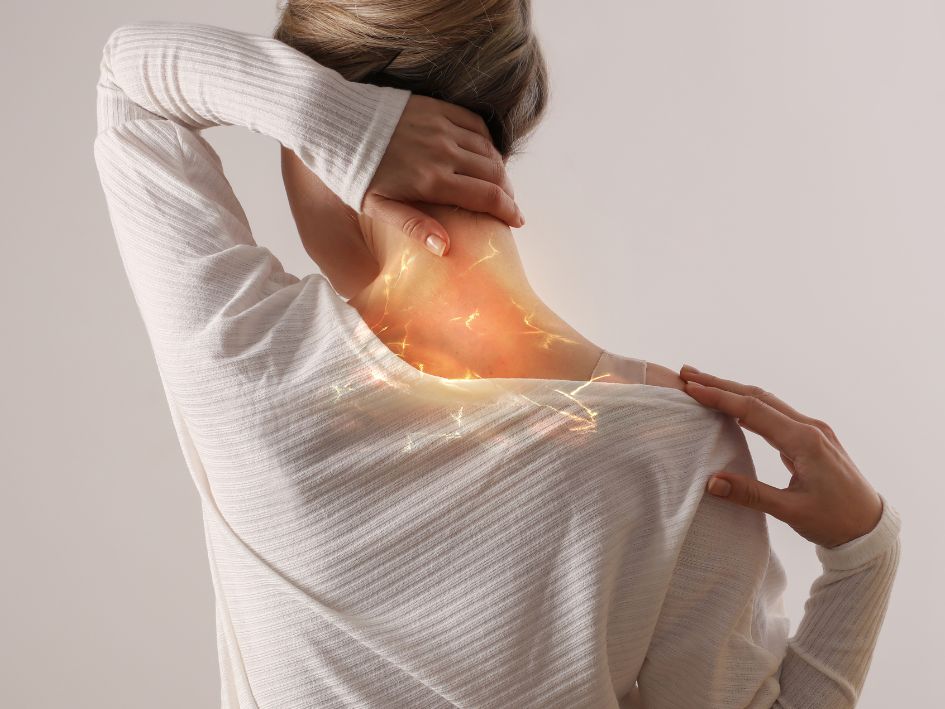
For many people with Medication Overuse Headache, the pain is not medication-driven alone. The upper cervical spine (C0–C3) plays a critical role, particularly in people with neck pain, prolonged desk postures, jaw clenching, or stress-related muscle tension.
The upper neck has direct neurological connections to headache and migraine pathways. Dysfunction in this region can trigger cervicogenic headaches, which often coexist with migraine and chronic daily headache. In a sensitised system, constant input from the upper neck can perpetuate pain and make it harder to reduce medication use.
How Upper Neck Physiotherapy Helps Break the Cycle
Upper cervical physiotherapy is a key component in managing MOH when cervicogenic headache features are present. A headache-trained physiotherapist focuses on:
- Restoring movement and reducing joint irritation in the upper cervical spine
- Improving deep neck flexor strength and endurance
- Reducing muscle guarding and protective tension
- Addressing posture-related load and sustained positions
- Managing jaw and neck co-contraction associated with stress or clenching
By reducing nociceptive (pain) input from the upper neck into the trigeminocervical system, physiotherapy helps calm the headache pathways and lowers the overall sensitivity of the nervous system. This support is particularly valuable during medication withdrawal, when headaches may temporarily worsen.
Breaking the Medication Overuse Cycle
Although MOH can feel overwhelming, it is one of the most treatable headache conditions. Management typically involves:
- Reducing or stopping the overused medication under medical guidance
- Managing withdrawal headaches
- Introducing preventative treatments where appropriate
- Addressing contributing factors such as upper neck dysfunction, jaw tension, sleep disturbance, and stress
Improvement often begins within weeks, with continued progress over several months.
The Importance of Talking to Your GP
If Medication Overuse Headache is suspected, speaking with your GP is an essential first step. Reducing or stopping headache medication should never be done abruptly without medical guidance, particularly for triptans, opioids, or combination medications.
Your GP can:
- Confirm whether your headache pattern fits Medication Overuse Headache
- Help create a safe medication withdrawal or reduction plan
- Prescribe preventative headache or migraine medication if appropriate
- Monitor for withdrawal symptoms and manage flare-ups
- Refer to specialists such as a neurologist or headache-trained physiotherapist when needed
A coordinated plan reduces anxiety, improves safety, and significantly increases the chance of long-term success. Addressing cervicogenic contributors alongside medical guidance makes recovery smoother and more sustainable.
When to Seek Help
If you rely on headache medication most days of the month or feel stuck in a cycle of ongoing headaches and neck pain, it may be time to seek support. Medication Overuse Headache is a recognised condition, and when upper cervical contributors are addressed with physiotherapy and medical oversight, recovery is achievable.
If you believe you may be suffering from MOH, book an appointment with the Headache Neck and Jaw Clinic. Our physiotherapists are experts in the treatment of a wide range of complex headache, migraine, neck and jaw conditions, and can work with you to incorporate specialist physiotherapy into your headache medication withdrawal treatment plan.

Lisa Eisfeld is a trained physiotherapist from Germany. She has also studied advanced Manual therapy and finished her Osteopathy Diploma in 2018 at the School for Manual Medicine Berlin. Lisa has also attained her Watson Headache® Approach Level 1 Foundation and Level 2 Consolidation courses. Read more about Lisa.