
The early months of motherhood involve many physical demands. Feeding, lifting, carrying, bathing, and soothing a baby often require repetitive movements and prolonged postures (see ‘Posture and parenting‘) that can place stress on the neck, shoulders, and back.
For mothers recovering from birth, especially after a Caesarean delivery, these physical demands can feel even more challenging. Supporting your body with good ergonomics and simple movement strategies can help reduce strain and support recovery during the postpartum period. If pain has already set in, our physios can help with neck pain and get you comfortable again.
Why Postpartum Ergonomics Matter
During pregnancy and after birth, the body goes through significant changes. Hormonal influences can affect ligament stability, and the abdominal and pelvic muscles may still be recovering.
For mothers who have had a Caesarean delivery, healing from abdominal surgery adds another layer of physical demand.
Common challenges during this period include:
-
- Reduced core strength
- Abdominal discomfort or tenderness
- Neck and shoulder tension from feeding and baby care
- Fatigue from repetitive movements and sleep disruption
Because of this, small ergonomic adjustments can make a meaningful difference in daily comfort.
Protecting Your Neck and Shoulders
Many parenting tasks encourage a forward head posture particularly when looking down at the baby.
To reduce strain on the neck:
-
- Bring your baby up to you, rather than bending down toward them.
- Use pillows for arm support during feeding.
- Try to keep your ears aligned with your shoulders when sitting.
- Take brief movement breaks after feeding sessions.
Even small posture resets throughout the day can help relieve neck tension.
Supporting Your Core After a Caesarean
After a Caesarean birth, the abdominal muscles and surrounding tissues need time to heal.
When lifting or moving:
-
- Roll onto your side before getting out of bed.
- Use your arms and legs to assist movement, rather than pushing through the abdomen.
- Keep your baby close to your body when lifting.
- Avoid sudden twisting movements.
These strategies help reduce unnecessary pressure on the healing abdominal area.
Setting Up an Ergonomic Feeding Space
A comfortable feeding setup can make a significant difference, particularly during long feeding sessions.
Helpful adjustments include:
-
- Sitting in a chair with back support
- Using a feeding pillow to support the baby’s weight
- Placing feet on a small footrest
- Supporting the arms and elbows
The goal is to allow the body to remain relaxed rather than holding tension through the shoulders and neck.
Gentle Postural Exercises
As recovery progresses, gentle exercises may help support posture and muscle balance. Always consult a health professional before beginning postpartum exercises.
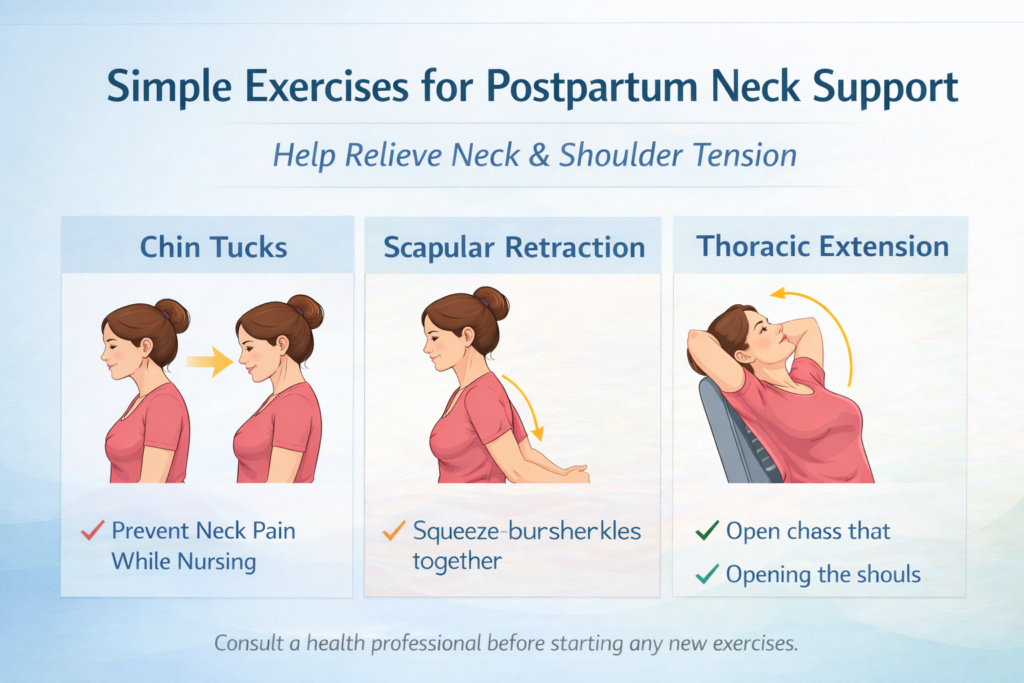
Examples may include:
Deep Neck Flexor Activation
Gentle chin nods can help strengthen the muscles that support the cervical spine.
Shoulder Blade Activation
Drawing the shoulder blades gently back and down can help counteract rounded shoulders.
Thoracic Mobility
Opening the chest and improving upper back mobility may reduce neck strain. Short movement breaks throughout the day can also reduce stiffness from prolonged sitting.
Creating Baby-Care Stations at Home
Setting up baby-care spaces with ergonomics in mind can help reduce strain.
Consider:
-
- Using a changing table at waist height
- Keeping frequently used baby items within easy reach
- Placing feeding pillows or cushions in commonly used seating areas
- Choosing chairs with good back support
- A well-arranged environment can make daily baby-care tasks more comfortable.
Listen to Your Body
Recovery after birth takes time, and every mother’s experience is different.
Signs that the body may need additional support include:
-
- Persistent neck or shoulder pain
- Back discomfort during baby-care tasks
- Difficulty maintaining posture while feeding
- Ongoing abdominal discomfort after Caesarean delivery
Seeking guidance from one of our physiotherapists can help identify strategies tailored to individual needs.
The role of hormones during and after pregnancy
During pregnancy, the body produces hormones such as relaxin, which help prepare the body for birth by softening ligaments and increasing joint mobility. While this is essential during pregnancy, it can also reduce overall body stability, particularly in the neck, shoulders, pelvis, and lower back.
These hormonal effects may continue for several months after birth, especially while breastfeeding.
Caring for your body is an important part of caring for your baby
Motherhood involves many physical demands, particularly in the early months when feeding and caring for a newborn require frequent repetitive movements. By incorporating ergonomic strategies, setting up supportive feeding spaces, and paying attention to posture, mothers can help reduce strain on the neck, shoulders, and back while supporting their recovery after birth.
Caring for your body is an important part of caring for your baby.
If you need advice to care for your body and posture post-partum, book an appointment with the Headache Neck and Jaw Clinic. We can provide expert advice, guide you through posture improvements and exercises, and provide effective treatment to reduce your symptoms.
Learn More About Pregnancy and Post-Partum Care
We also have additional information and resources available on our website covering:
These resources are designed to help support mums throughout pregnancy and early motherhood with practical advice and education.

Lisa Eisfeld is a trained physiotherapist from Germany. She has also studied advanced Manual therapy and finished her Osteopathy Diploma in 2018 at the School for Manual Medicine Berlin. Lisa has also attained her Watson Headache® Approach Level 1 Foundation and Level 2 Consolidation courses. Read more about Lisa.