

Breastfeeding is one of the most beautiful ways to connect with your baby. However, the long hours spent feeding can place significant strain on a mother’s neck, shoulders, and upper back, especially when posture is not well supported.
One of the most common issues seen in postpartum mothers is Head Forward Posture (HFP), which can develop quickly during the breastfeeding months. Understanding how posture affects the neck during feeding can help prevent pain and long-term musculoskeletal problems.
What Is Head Forward Posture?
Head Forward Posture (HFP) occurs when the head moves forward in front of the shoulders rather than being balanced directly above the spine.

For every few centimetres the head moves forward, the load on the neck muscles increases significantly. The human head weighs approximately 4.5–5.5 kg, but with a forward posture, the effective weight on the cervical spine can feel much heavier.
During breastfeeding, mothers often:
- Look down at their baby for long periods
- Round their shoulders forward
- Lean their upper body toward the baby instead of bringing the baby up to them.
Over time, these positions can overload the muscles that support the neck.
Why Breastfeeding Can Contribute to Neck Pain
Feeding sessions can last 20–40 minutes, and babies may feed 8–12 times per day, meaning mothers can spend several hours daily in the same position.
This repetitive posture may lead to:
- Neck stiffness
- Shoulder tension
- Upper back pain
- Headaches
- Reduced neck mobility
- Jaw Bruxism
The muscles most affected include the deep neck flexors, upper trapezius, levator scapulae, and the scalene muscles. These muscles work harder to support the head when the posture collapses forward.
Common Postural Mistakes During Breastfeeding
Many mothers unintentionally adopt positions that strain their neck and spine.
Common examples include:
- Leaning forward toward the baby
- Looking down continuously at the infant
- Lack of arm or back support
- Holding the baby too low in the lap
- Feeding without pillows or support
Over time, this can reinforce poor posture patterns and contribute to persistent discomfort.
Ergonomic Breastfeeding Principles
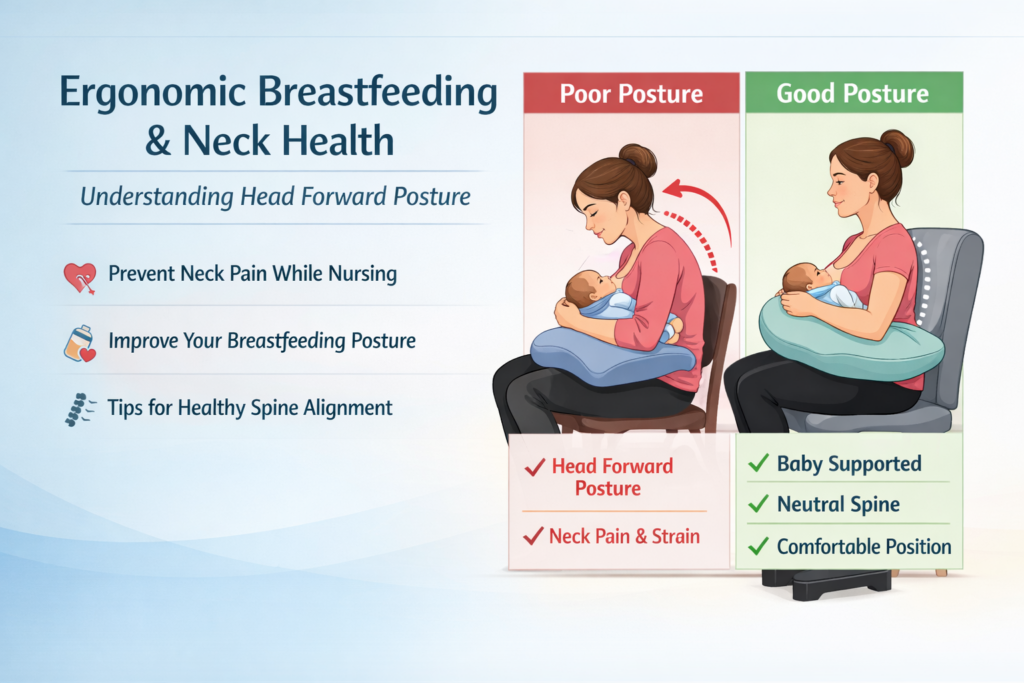
Improving ergonomics during breastfeeding can significantly reduce strain on the neck.
1. Bring the Baby to You
Instead of bending your neck and shoulders forward, raise the baby using pillows so the baby is at breast height.
2. Support Your Arms
Arm fatigue often causes mothers to slump forward. Using pillows or armrests can help maintain an upright posture.
3. Keep Your Spine Neutral
Sit with your back supported and shoulders relaxed. Try to keep your ears aligned over your shoulders.
4. Use a Footrest
A small footrest can help maintain pelvic alignment and reduce lower back strain.
5. Change Positions Frequently
Alternate feeding positions such as:
- Cradle hold
- Cross-cradle hold
- Football hold
- Side-lying feeding
Changing positions reduces repetitive stress on the same muscle groups.
The Role of the Deep Neck Flexors
The deep neck flexor muscles play an important role in supporting the cervical spine. When these muscles become weak or inhibited, the body compensates by overusing superficial muscles such as the upper trapezius and sternocleidomastoid.
This imbalance contributes to:
- Forward head posture
- Neck fatigue
- Reduced cervical stability
Gentle exercises targeting these muscles can help restore better posture and reduce pain.
Simple Exercises for Postpartum Neck Support
Before beginning any exercise program postpartum, mothers should consult a healthcare professional.
Examples of helpful exercises include:
Chin Tucks
Gently draw the chin backward while keeping the head level. This activates the deep neck flexors.
Scapular Retraction
Gently squeeze the shoulder blades together to support upper back posture.
Thoracic Extension
Opening the chest and extending the upper back helps counteract rounded shoulders. Even short movement breaks between feeding sessions can reduce muscle tension.
When to Seek Professional Help
If neck pain persists or worsens, professional assessment may be beneficial. Health professionals such as neck physiotherapists, lactation consultants, or speech pathologists can help assess feeding posture and musculoskeletal strain.
Signs that further assessment may be helpful include:
- Persistent neck pain
- Reduced neck movement
- Headaches related to posture
- Tingling or numbness in the arms
- Difficulty maintaining an upright posture during feeding
If you are breastfeeding and experiencing Head Forward Posture, our physiotherapists at the Headache Neck and Jaw Clinic can help. We can provide expert advice, guide you through posture improvements and exercises, and provide effective treatment to reduce your symptoms.
Final Thoughts
Breastfeeding places unique physical demands on mothers. While caring for a newborn often takes priority, supporting your own posture is equally important. Small ergonomic adjustments during feeding can make a significant difference in preventing Head Forward Posture and neck strain.
By bringing the baby to the breast, maintaining a neutral spine, and incorporating gentle movement, mothers can protect their neck health while continuing to nurture their baby comfortably.

Lisa Eisfeld is a trained physiotherapist from Germany. She has also studied advanced Manual therapy and finished her Osteopathy Diploma in 2018 at the School for Manual Medicine Berlin. Lisa has also attained her Watson Headache® Approach Level 1 Foundation and Level 2 Consolidation courses. Read more about Lisa.