

After birth, much of a parent’s day involves caring for their baby through repetitive activities such as bathing, dressing, lifting, and using car seats. While these tasks may seem simple, they often require bending forward, reaching, and lifting in positions that can place significant strain on the neck, shoulders, and back.
Over time, these repetitive movements can contribute to postural strain and musculoskeletal discomfort, particularly in the neck and upper back.
Understanding how everyday baby-care activities affect posture can help parents protect their bodies while caring for their child.
Why Posture Matters During Baby Care
Many baby-care tasks involve a forward-reaching position, where the head and shoulder move in front of the body. This position is often combined with bending at the waist or holding baby away from the body.
These patterns can contribute to:
- Neck pain and stiffness
- Shoulder tension
- Upper back discomfort
- Lower back strain
- Increased fatigue
When repeated many times throughout the day, these movements may reinforce forward head posture and rounded shoulders, placing additional load on the spine.
Bathing Your Baby
Bathing often requires parents to lean forward over a bath, sink, or baby tub.
Common postural challenges include:
- Bending forward for prolonged periods
- Looking down continuously
- Reaching with the arms while supporting the baby
Tips for Better Posture
- Place the baby bath at waist height whenever possible.
- Use a stable surface or stand instead of bathing the baby on the floor.
- Keep the baby close to your body while supporting them.
- Try to maintain a neutral spine rather than rounding forward.
- Taking short posture breaks after bathing can also help reduce muscle tension.
Dressing and Changing Your Baby
Changing nappies and dressing babies often involves leaning over a low surface such as a bed or couch. When these surfaces are too low, parents may repeatedly bend at the neck and back.
Tips for Better Posture
- Use a changing table that is close to waist height.
- Stand close to the baby rather than reaching forward.
- Engage your core muscles and keep your shoulders relaxed.
- Alternate sides when dressing the baby to reduce repetitive strain.
Small adjustments to height and positioning can make a significant difference over time.
Lifting and Carrying Your Baby
Lifting a baby dozens of times per day—from the cot, pram, or floor—places repeated load on the spine. Many parents instinctively lift by bending forward with straight legs, which increases pressure on the lower back.
Safer Lifting Strategies
- Bend through the knees and hips rather than the back.
- Bring the baby close to your body before lifting.
- Avoid twisting while holding your baby.
- Engage your core muscles during the lift.
- Keeping the baby close to your centre of gravity reduces strain on both the back and shoulders.
Using Car Seats
Car seats can be surprisingly demanding on the body, particularly when lifting them in and out of the car. The combination of twisting, reaching, and lifting weight away from the body can strain the neck, shoulders, and lower back.
Tips for Car Seat Ergonomics
- Whenever possible, lift the baby out of the car seat first before removing the seat.
- Step closer to the car rather than reaching from outside.
- Keep the load close to your body while lifting
- Avoid twisting while carrying the seat.
These small changes can reduce unnecessary strain.
The Cumulative Effect of Daily Activities
Each individual baby-care task may only take a few minutes, but when repeated throughout the day they can add up to hours spent in forward-bending positions.
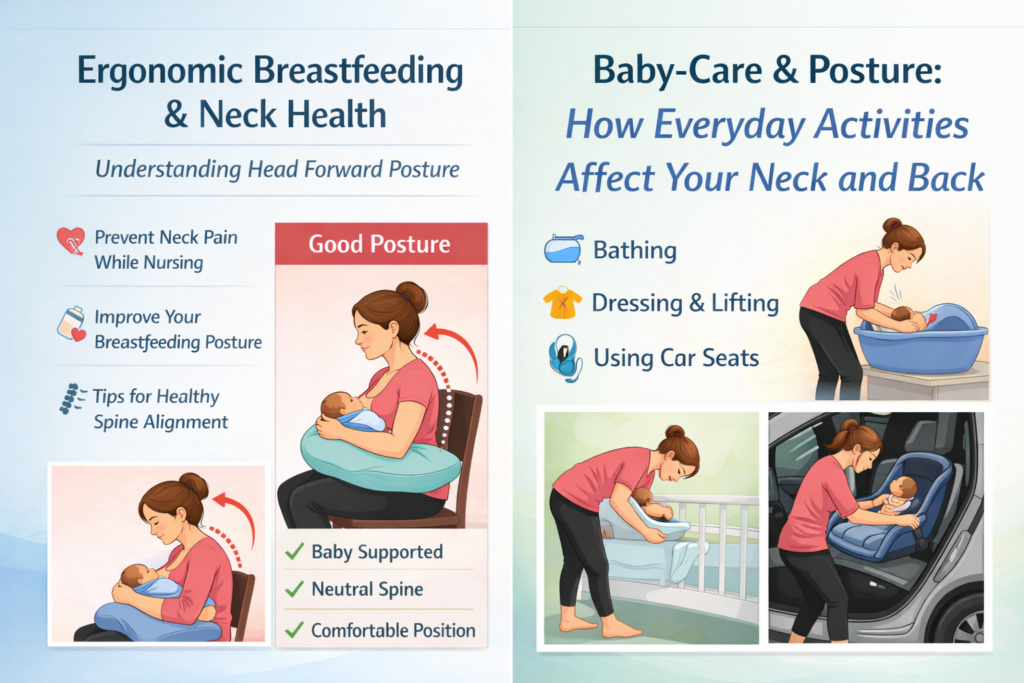
Over time this may contribute to:
- Forward head posture
- Tight chest muscles
- Weak upper back muscles
- Neck and shoulder pain
This is particularly important for mothers recovering from pregnancy and birth, when the body is already adapting to hormonal and physical changes.
Supporting Your Body During the Postpartum Period
Parents often prioritise their baby’s comfort and safety, sometimes forgetting to consider their own physical wellbeing.
Simple strategies that may help include:
- Setting up ergonomic baby-care stations at home
- Taking short movement breaks throughout the day
- Performing gentle postural strengthening exercises
Seeking professional guidance if pain develops. Supporting your own posture not only helps prevent discomfort but also allows you to care for your baby more comfortably.
Looking after your baby and your posture
Caring for a baby involves many repetitive movements that can challenge the body’s posture. By becoming more aware of everyday habits such as bathing, dressing, lifting, and using car seats, parents can make small ergonomic adjustments that protect their neck and back.
Healthy posture during baby care is not about perfection; it is about making small, supportive changes that help parents stay comfortable while enjoying time with their baby.
If you are caring for a baby and suffering from neck pain or headaches, book an appointment with the Headache Neck and Jaw Clinic. Our specialist physiotherapists can provide expert advice, guide you through posture improvements and exercises, and provide effective treatment to reduce your symptoms.

Lisa Eisfeld is a trained physiotherapist from Germany. She has also studied advanced Manual therapy and finished her Osteopathy Diploma in 2018 at the School for Manual Medicine Berlin. Lisa has also attained her Watson Headache® Approach Level 1 Foundation and Level 2 Consolidation courses. Read more about Lisa.